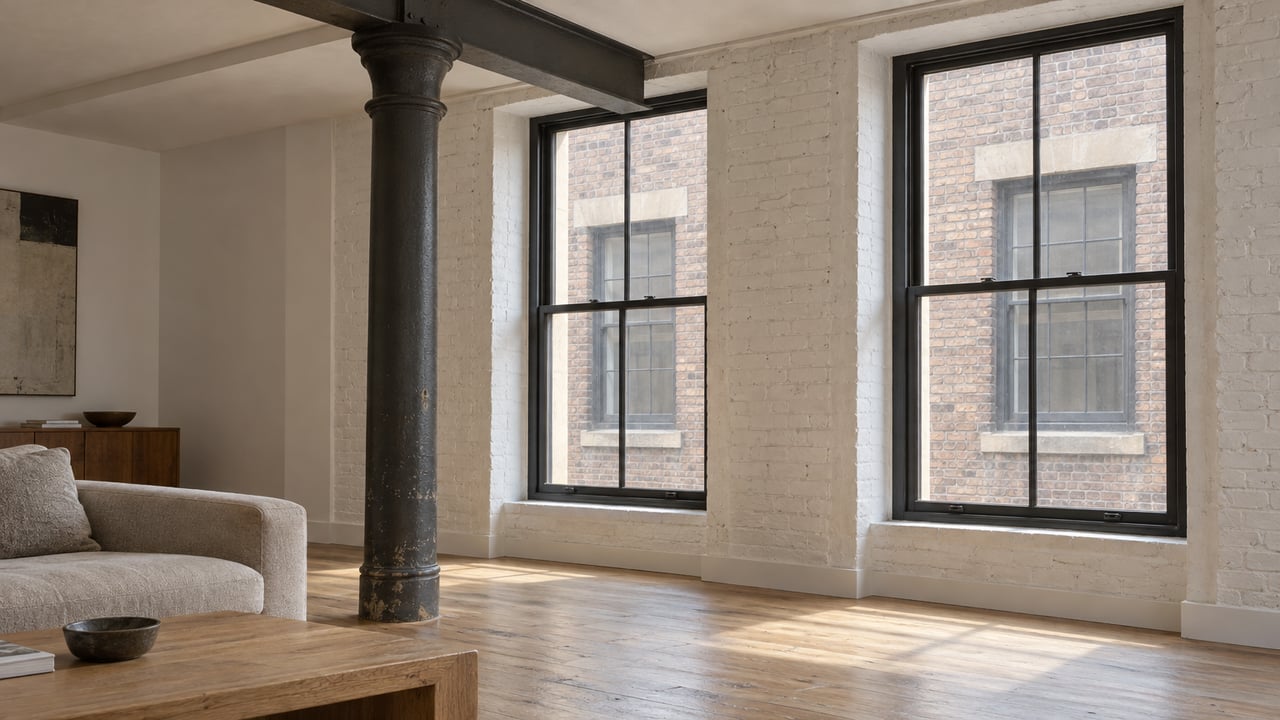
If you’re deciding between Brooklyn and Manhattan, you’re probably not just choosing a borough. You’re choosing how you want to live, what kind of home you want to buy, and how much time and money you’re willing to trade for it. The good news is that there is a smart way to compare both markets. Let’s break it down.
Start With the Right Question
The biggest mistake buyers make is treating Brooklyn and Manhattan like two simple price buckets. In reality, this is a product and commute decision more than a borough decision.
That means you should compare the kind of home you want, the neighborhoods that match your lifestyle, and the commute you can realistically live with. Once you look at it that way, the choice usually becomes much clearer.
Brooklyn vs. Manhattan at a Glance
Brooklyn and Manhattan offer very different housing patterns. In 2024, Brooklyn had 1,122,521 housing units, while Manhattan had 932,314. At the same time, Manhattan was much denser, with about 73,293 residents per square mile compared with Brooklyn’s 37,731.
In practical terms, Manhattan tends to mean more vertical living and more large-building inventory. Brooklyn usually offers a wider mix of housing types and often more space, depending on the neighborhood.
Housing Types Matter Most
If you already know the type of property you want, that can narrow your search fast. Brooklyn and Manhattan are built differently, and their sales mix shows it.
In 2024, Brooklyn recorded 1,495 one-family sales, 2,997 two-to-four-family sales, and 2,547 condo sales. Manhattan recorded just 82 one-family sales, 92 two-to-four-family sales, and 4,584 condo sales.
That tells you something important. If you want a townhouse, brownstone-style home, or a one-to-four-family property, Brooklyn is generally the more practical place to look. If you want a condo or co-op in a dense, central location, Manhattan usually gives you a deeper concentration of options.
When Brooklyn May Fit Better
Brooklyn may be the stronger fit if you want:
- A townhouse, brownstone, or low-rise building
- A one-family or two-to-four-family property
- More housing variety across neighborhoods
- A wider range of entry points depending on area and product type
Brooklyn also added more housing over time. From 2010 to 2024, it added 108,544 new housing units, compared with 66,580 in Manhattan. In 2024, Brooklyn also issued more residential permits and certificates of occupancy, which points to a larger pipeline of new development.
When Manhattan May Fit Better
Manhattan may make more sense if you want:
- A condo or co-op in a larger building
- Closer access to major office districts and central business areas
- A shorter average commute
- A more condo-heavy search with more inventory in that category
For buyers focused on efficiency, convenience, and building amenities, Manhattan often stands out. It typically buys time, even if that comes at a higher price point.
Price Differences Are Real, but Not Simple
Yes, Manhattan is usually more expensive overall. But that does not mean Brooklyn is always cheaper.
In 2024, Brooklyn’s median sales prices were $890,970 for one-family buildings, $525,000 for two-to-four-family buildings, and $995,000 for condominiums. Manhattan’s comparable medians were $6.3 million, $1.025 million, and $1.55 million.
At a broad level, that shows Manhattan operating at a higher tier. But borough-wide medians only tell part of the story, because neighborhood pricing can overlap.
Prime Brooklyn Can Compete With Manhattan
Some Brooklyn neighborhoods are firmly in the same pricing conversation as parts of Manhattan. In 2024, Park Slope/Carroll Gardens had a condo median of $1.627 million, which was above the Upper East Side at $1.595 million and not far from Chelsea at $1.92 million.
Other Brooklyn areas also show this range clearly. Fort Greene/Brooklyn Heights came in at $1.3925 million, Greenpoint/Williamsburg at $1.25 million, Crown Heights/Prospect Heights at $1.1015 million, and Bay Ridge/Dyker Heights at $572,000.
So if your assumption is that Brooklyn automatically means lower prices, it helps to reset that thinking. Brooklyn offers a wider spread, not a guaranteed discount.
Commute Time Can Change the Answer
For many buyers, the real decision comes down to time. If you need regular access to Midtown, Downtown Manhattan, or other central business districts, commute patterns matter.
In 2024, mean travel time to work was 31.4 minutes in Manhattan and 41.7 minutes in Brooklyn. The broad takeaway is simple: Manhattan usually buys time, while Brooklyn often buys more space or a lower entry point.
Still, commute differences are highly neighborhood-specific. That is why borough averages should only be your starting point.
Manhattan Neighborhood Commute Snapshot
Neighborhood-level data shows how strong Manhattan’s convenience advantage can be. Chelsea and Midtown both posted 27.8-minute average commutes, while the Upper East Side came in at 31.2 minutes.
These areas also had high car-free commute rates, ranging from 85.0% to 90.5%. That reflects how integrated many Manhattan neighborhoods are with transit and walkable daily routines.
Brooklyn Neighborhood Commute Snapshot
Central Brooklyn neighborhoods remain very competitive for many Manhattan-bound buyers. Fort Greene/Brooklyn Heights posted a 34.8-minute average commute, while Greenpoint/Williamsburg was 35.1 minutes.
Park Slope/Carroll Gardens came in at 38.5 minutes, Crown Heights/Prospect Heights at 41.5 minutes, and Bay Ridge/Dyker Heights at 42.4 minutes. The MTA system includes 472 subway stations and 75 express bus routes, including BM express bus service from Brooklyn to Manhattan, which helps support commuter access.
If your work schedule is flexible or hybrid, a few extra minutes may be an easy trade for more space or a different housing type. If you commute daily and want the shortest trip possible, Manhattan may rise to the top.
Lifestyle Fit Is Different in Each Borough
Numbers matter, but so does how your home fits your day-to-day life. Brooklyn and Manhattan feel different because their housing stock, density, and ownership patterns are different.
In 2024, owner-occupied housing rates were 29.1% in Brooklyn and 25.6% in Manhattan. Manhattan was also more renter-oriented overall, and median gross rent was higher at $2,212 versus Brooklyn’s $1,837.
That does not make one borough better than the other. It simply means the ownership experience, building types, and neighborhood rhythm can vary in meaningful ways.
Brooklyn Often Offers More Variety
If you want optionality, Brooklyn has an edge. The borough’s sales mix includes far more one-family and two-to-four-family homes, along with condos across a broad price range.
That makes Brooklyn especially useful for buyers who want to compare different ownership styles, from townhouse living to newer condo buildings. It also gives you more room to match your purchase to long-term goals.
Manhattan Often Offers More Centrality
If you want to be close to the city core, Manhattan often simplifies the search. The borough’s condo-heavy inventory and shorter commute patterns appeal to buyers who prioritize direct access, convenience, and dense urban living.
For many buyers, that translates into less travel time and easier daily logistics. If your schedule is intense, that can be a very real quality-of-life advantage.
A Practical Way to Decide
If you’re torn between Brooklyn and Manhattan, use this simple framework:
- Choose your property type first. Decide whether you want a condo, co-op, townhouse, or one-to-four-family property.
- Set your realistic budget. Compare neighborhoods within that range, not just borough averages.
- Test the commute. Focus on the neighborhoods you would actually consider and compare door-to-door travel time.
- Think about your weekly routine. Consider where you work, how often you commute, and how much space or convenience matters most.
- Compare neighborhood by neighborhood. This is the most accurate way to make the decision.
That last step matters most. Brooklyn and Manhattan are not uniform markets, and the best match for you usually appears when you compare a few specific neighborhoods instead of two borough-wide stereotypes.
The Bottom Line
There is no universal winner in the Brooklyn versus Manhattan debate. Manhattan often wins on commute time, centrality, and condo concentration. Brooklyn often wins on housing variety, supply, and the ability to consider more property types.
The right move depends on what you value most: time, space, housing style, or price flexibility. If you compare the right neighborhoods and the right product types, you can make a decision that fits both your lifestyle and your long-term goals.
If you want help narrowing your search with a more data-driven, neighborhood-specific strategy, Mathiew Wilson can help you compare Brooklyn and Manhattan with clarity and confidence.
FAQs
Is Brooklyn always cheaper than Manhattan for buyers?
- No. Manhattan is usually more expensive overall, but prime Brooklyn neighborhoods can overlap with or exceed pricing in some Manhattan areas.
Is Manhattan better than Brooklyn for commuting to work?
- Generally, yes. Manhattan had a shorter mean travel time to work in 2024, though some central Brooklyn neighborhoods remain competitive for Manhattan commuters.
Is Brooklyn better than Manhattan for townhouses and small buildings?
- Yes. Brooklyn had far more one-family and two-to-four-family sales in 2024, which makes it the more practical search area for those property types.
Is Manhattan better than Brooklyn for condo buyers?
- Often, yes. Manhattan recorded many more condo sales in 2024, showing a deeper condo-heavy market.
Should you compare Brooklyn and Manhattan by borough averages alone?
- No. The most accurate way to decide is neighborhood by neighborhood, based on property type, budget, and commute.