Wondering whether the Financial District fits the way you actually want to live in Manhattan? That is the right question to ask, because FiDi offers a very specific version of city life: efficient, connected, and increasingly residential, but not identical to other downtown neighborhoods. If you are weighing convenience, building amenities, waterfront access, and long-term value against a quieter evening atmosphere, this guide will help you make a smarter decision. Let’s dive in.
Why FiDi Feels Different
The Financial District has changed in a big way over the past few decades. According to the Downtown Alliance, the local population grew from about 14,000 in 1995 to nearly 70,000 today, and nearly 22.5 million square feet of office space has been converted to residential use since 1995. That shift is why FiDi now functions as a true mixed-use neighborhood instead of only a business district.
Still, FiDi does not feel the same as a classic low-rise downtown area. StreetEasy describes it as busy during the day with office workers, then noticeably calmer at night, with nightlife concentrated in a few smaller pockets. If you value calm evenings and a more building-focused lifestyle, that can be a plus. If you want constant street activity, it may feel quieter than expected.
Housing in FiDi
Conversion Buildings Shape the Market
One of FiDi’s defining features is its conversion-heavy housing stock. The city’s Office Adaptive Reuse Study explains that older office buildings, especially those built before January 1977, have been well positioned for residential conversion in the neighborhood. That helps explain why many homes here come from former office towers rather than traditional prewar apartment buildings.
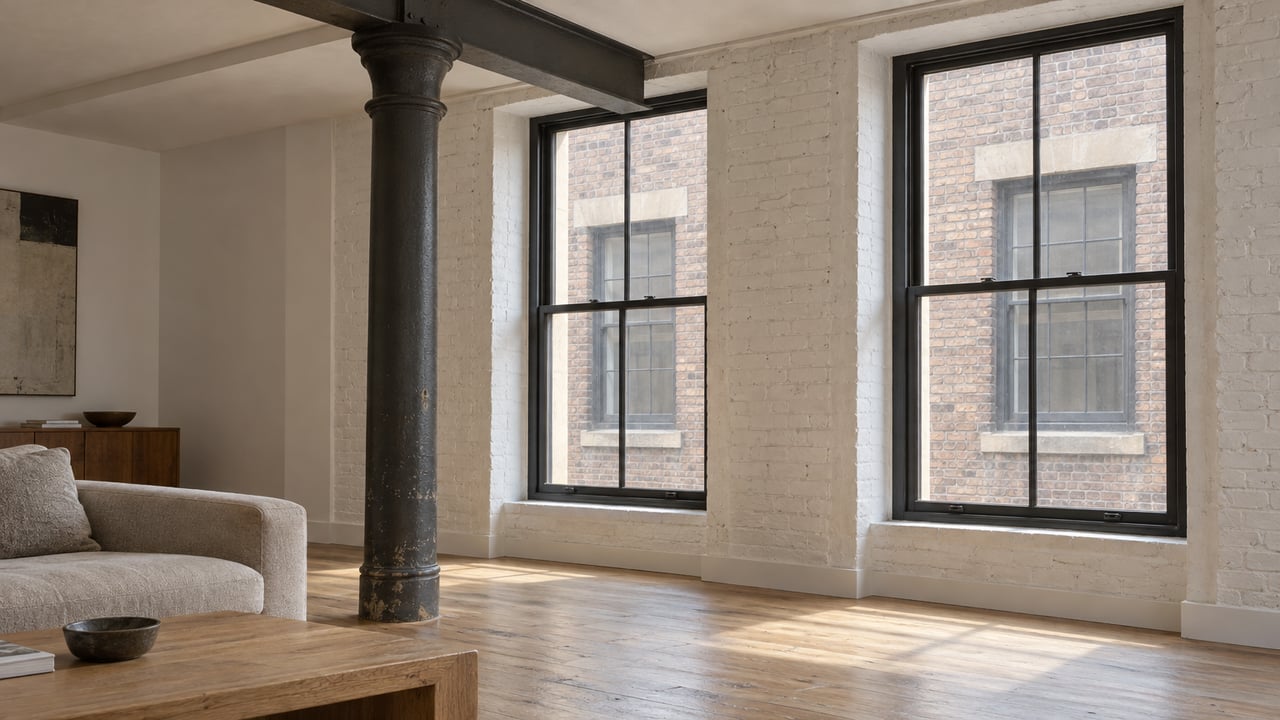
This also means apartment layouts can vary more than in neighborhoods with one dominant housing type. In FiDi, you may see dramatic lobbies, oversized windows, unusual floor plans, and a wide range of interior finishes from one building to the next. For buyers and renters, that makes building-by-building analysis especially important.
The conversion pipeline in Lower Manhattan remains significant. The Comptroller’s 2025 report highlights projects such as 20 Broad Street, 180 Water Street, 70 Pine Street, 1 Wall Street, and the large 25 Water Street conversion with 1,320 units. That scale shows how deeply adaptive reuse continues to shape the neighborhood.
Newer Condos and Luxury Rentals
FiDi is not only about older conversions anymore. StreetEasy’s 2026 neighborhood report notes that more luxury-tier condos and rentals are coming to market, adding a newer layer to the neighborhood’s housing mix. Active inventory in the area includes developments such as 25 Broad Street and 125 Greenwich Street.
For many buyers, that creates a useful range of options. You can compare character-driven conversion units, newer condo towers, and rental buildings with full-service amenities. That flexibility is one reason FiDi appeals to people who want a downtown base without paying top-tier prices in some of Manhattan’s most expensive downtown enclaves.
StreetEasy’s current market snapshot places the median asking price at $1.197 million and the median asking rent at $4,690. In other words, FiDi is still very much a Manhattan luxury market, but it may offer a different value equation than nearby neighborhoods with a stronger late-night social scene.
Lifestyle in the Financial District
A Building-First Way to Live
FiDi often works best when you care as much about the building as the block. Many residents are drawn to full-service towers, amenity packages, and homes where the in-building experience carries a lot of the lifestyle appeal. That is a different rhythm from neighborhoods where sidewalk culture is the main draw.
If your ideal day includes a smooth commute, a polished lobby, a gym in the building, and a quiet return home, FiDi may feel very efficient. If your priority is stepping outside into a dense lineup of neighborhood bars, independent storefronts, and constant evening activity, you may want to compare it carefully with other downtown options.
Dining and Culture Are Growing
FiDi’s food and culture scene has improved meaningfully. Downtown Alliance’s 2025 Dine Around Downtown brought together 48 restaurants, reflecting the area’s expanding culinary mix. The organization also points to ongoing events and programming that help activate Lower Manhattan beyond office hours.
The World Trade Center campus adds another layer of convenience and activity. The Oculus shopping and dining center offers more than 80 places to shop, eat, drink, and spend time, and PAC NYC, which opened in September 2023, brings theater, music, dance, film, and dining to the campus. That does not make FiDi nightlife-heavy, but it does make the neighborhood feel more complete than it once did.
Waterfront Access Stands Out
One of FiDi’s strongest lifestyle advantages is easy access to the waterfront. NYC Parks describes The Battery as a place for waterfront views and gardens, and the broader East River waterfront planning vision reinforces the neighborhood’s appeal for walking, jogging, and biking.
If you want harbor views and outdoor space woven into daily life, FiDi offers a strong case. A morning walk near The Battery or along the waterfront can feel very different from a more interior Manhattan neighborhood. For many residents, that outdoor access helps balance the district’s dense, vertical character.
The Tradeoff: Resilience and Construction
Waterfront living in Lower Manhattan also comes with a practical reality. The Financial District and Seaport Climate Resilience Master Plan is a major public project projected to cost $7 billion and designed to protect the low-lying neighborhood from storm surge and sea-level rise.
That is important context if you are thinking long term. Waterfront access is a real amenity, but resilience planning is also part of the ownership and lifestyle conversation here. NYC Parks notes that portions of The Battery are currently closed during the Battery Coastal Resilience Project, so some public spaces may be affected during construction even as the long-term goal is protection and preservation.
Transit Is FiDi’s Biggest Advantage
If you commute often, FiDi makes a strong argument for itself. The World Trade Center and Fulton Transit Center area connects to the 1 at WTC Cortlandt, 2, 3, 4, 5, A, C, J, and Z at Fulton Street, the E at World Trade Center, and the R and W at Cortlandt. The Oculus also connects to 12 subway lines and the World Trade Center PATH station.
That level of access gives you multiple routes instead of forcing you to rely on one line. It also creates a practical edge if you travel between Manhattan and New Jersey, since PATH links the area to Hoboken and Newark. For many buyers and renters, this transit density is the single biggest reason FiDi stays on the shortlist.
Accessibility matters too. The World Trade Center PATH station is elevator accessible and includes eight elevators in the fare zone, which can be a meaningful detail if you depend on frequent transit use.
Who FiDi Usually Fits Best
FiDi tends to be a strong fit if you want a central downtown location, excellent transit, and a home in a full-service or amenity-rich building. It also suits buyers and renters who like the idea of converted architecture, newer condo options, and proximity to the waterfront.
You may also appreciate FiDi if your schedule is commute-heavy and you want Manhattan access that feels highly functional. The neighborhood supports an efficient lifestyle, especially if you value convenience, clean building operations, and multiple transportation options.
FiDi can be a weaker fit if your ideal neighborhood is low-rise, highly social, and active late into the night. StreetEasy’s description of lower evening energy is worth taking seriously. This is not a drawback for everyone, but it is a real part of the neighborhood’s identity.
Questions to Ask Before You Move
Before choosing FiDi, it helps to look beyond the apartment photos and ask a few practical questions:
- Do you want your lifestyle to come from the building, the streetscape, or both?
- How important is fast access to multiple subway lines or PATH?
- Would you enjoy a quieter evening environment?
- Are you drawn to conversion buildings, newer towers, or both?
- Does waterfront access matter enough to influence your decision?
- Are you comfortable evaluating building-specific details carefully in a conversion-heavy market?
In FiDi, those answers matter more than broad neighborhood labels. The right fit often comes down to your daily routine, your tolerance for tradeoffs, and the kind of Manhattan experience you want most.
Final Take
The Financial District is right for your next home if you want Manhattan living that is transit-rich, building-focused, and increasingly residential. It offers a distinctive mix of converted towers, newer luxury inventory, waterfront access, and practical convenience that can be hard to match elsewhere downtown.
The key is knowing what FiDi is, and what it is not. If you want a polished, efficient downtown base with strong connectivity and growing lifestyle options, it deserves a serious look. If you want a classic neighborhood feel with constant street-level energy, you may want to compare it with other areas before making a move.
If you want help comparing FiDi buildings, pricing, and fit for your next move, connect with Mathiew Wilson for clear, data-driven guidance across the Manhattan market.
FAQs
Is the Financial District in Manhattan good for commuting?
- Yes. FiDi’s biggest practical advantage is transit access, with connections through the World Trade Center and Fulton Transit Center area to multiple subway lines and the PATH system.
What types of homes are common in the Financial District?
- FiDi is known for converted office buildings, along with newer condo towers and luxury rental buildings, so the housing mix can vary a lot by building.
Is the Financial District neighborhood active at night?
- It is generally quieter at night than some other downtown neighborhoods, with nightlife and evening activity concentrated in a few smaller areas.
Is the Financial District a good fit for waterfront living in Manhattan?
- It can be, especially if you value access to The Battery and the broader waterfront for walking, jogging, and views.
What should buyers know about Financial District buildings?
- Buyers should pay close attention to building-level details because FiDi’s conversion-heavy housing stock can create more variation in layout, systems, and apartment feel.
Is the Financial District a good neighborhood for renters and buyers?
- It can be a strong fit if you want convenience, transit access, full-service buildings, and a downtown location with a growing residential identity.